
The traditional bouchons are small bistro in inns that evolved from the days when “Meres” would feed the silk workers passing through Lyon in the seventeenth and eighteenth centuries. The Lyonnais “Meres” (Mothers) were the cooks of the great bourgeois families in Lyon, some of whom, in the middle of the eighteenth century, decided to set up business for themselves. Others were let go with the Crash in 1929, and set up for themselves in turn. They proposed a simple but refined style of culinary pleasure and a warm atmosphere. The first mention of a Mere dates back to 1759 with Mere Guy. Also among those known were Mere Vittet and Mere Lea who ran the restaurant La Voute in place Antonin Gourju in Lyon. She was renowned for her tablier de sapeur (tripe) and macroni gratin. Mere Lea, famous for her frankness and outspokenness would take her shopping cart with her to the market in Saint Antoine, a cart on which was written “Caution! Weak woman, but big mouth,” and top of all Mere Brazier (employed by Mere Fillioux} who became the most famous as she was the first woman to receive three stars from the Michelin Guide in 1933 for the restaurant she opened in rue Royale in 1921. One of her most famous apprentices was a young Paul Bocuse.
The bouchon is a traditional and typical Lyonnais restaurant where local specialities are served including tablier de sapeur, quenelles, salade lyonnaise with bacon lardons, a poached egg and croutons) and cervelle de canut (unappetisingly translated as “silk worker’s brain,” but in fact cottage cheese with herbs). This is generally washed down with a healthy glass of Beaujolais or Cotes du Rhone, served in a ‘pot’ (46cl) or ‘fillette’ (a third of a bottle). These friendly and simple establishments have been cited by numerous authors. As stated by Jean-Marie Fonteneau: The true bouchon must maintain a sincere tradition of Lyonnais cuisine, based on the authenticity of the products, and must also be a welcoming environment, full of joy and good humour. Fro some, the term ‘bouchon’ comes from the verb bouchonner’, to rub down, and the practice of rubbing down clients’ horses with a straw plug. For others, there is another hypothesis, suggested by Nizier du Puitspelu in his “Littre de la Grand’Cote” where the word ‘bouchon’ comes from the old habit innkeepers had of identifying their establishments with olive or pine branches in ball shape and suspended as a sign over the front entrance.
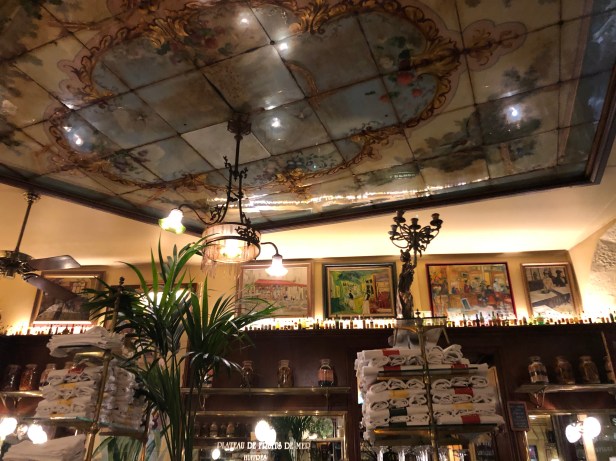
True bouchons are simple places with limited selection and seating. The bouchons lining the pedestrian streets of Vieux Lyon and Rue Merciere on the Presqu’ile have great atmosphere. The Menu Lyonnais is usually a set menus containing limited selection as below.
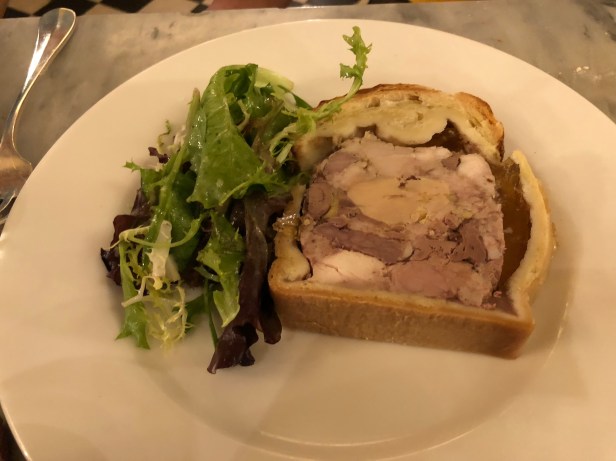
Pate en croute au ris de veau et foie gras, salade / Homemade pate croute, fresh duck liver and sweetbread, salad 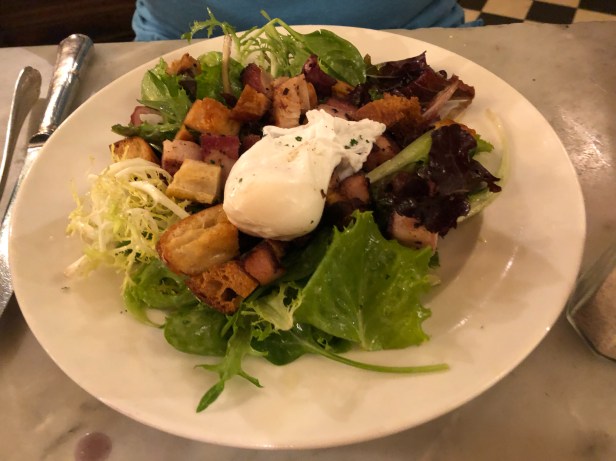
Salade lyonnaise: lardons, croutons ailles, oeuf poche / Lyonnaise salad: bacon, garlic croutons, poached egg 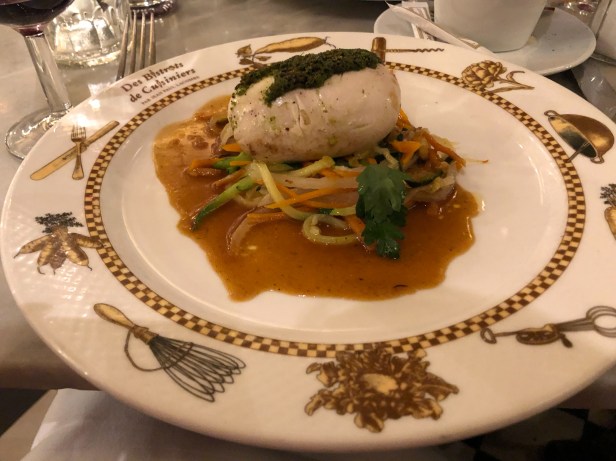
Ballotine de volaille en croute aux herbs, julienne de legume / Ballotine of poultry in a pastry case in herbs, vagetables 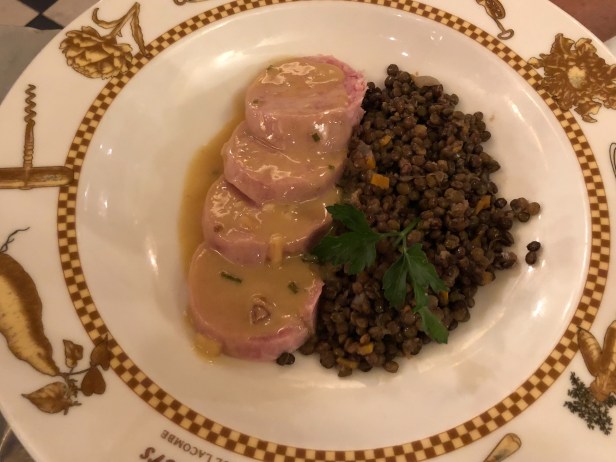
Ballotine de volaille en croute aux herbs, julienne de legume / Ballotine of poultry in a pastry case in herbs, vagetables 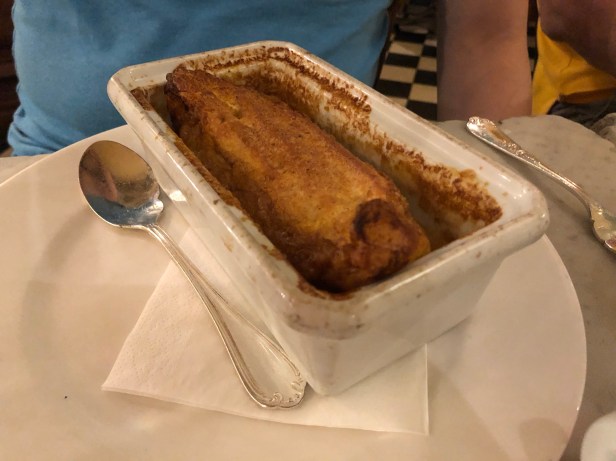
Ballotine de volaille en croute aux herbs, julienne de legume / Ballotine of poultry in a pastry case in herbs, vagetables 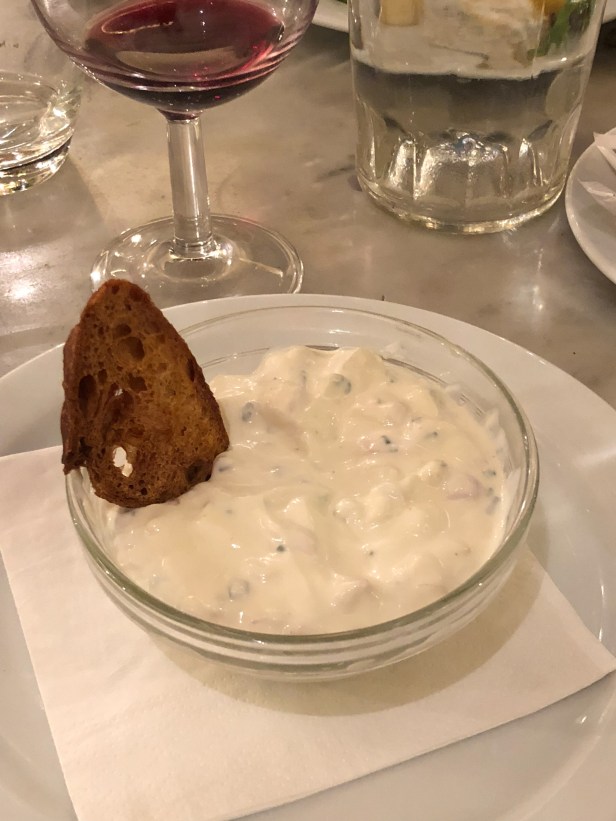
Cervelle de canut (frmage blanc, echolotes et fines herbes) / Fresh farm cheese seasoned with cream, chives, shallots, olive oil 
Cervelle de canut (frmage blanc, echolotes et fines herbes) / Fresh farm cheese seasoned with cream, chives, shallots, olive oil 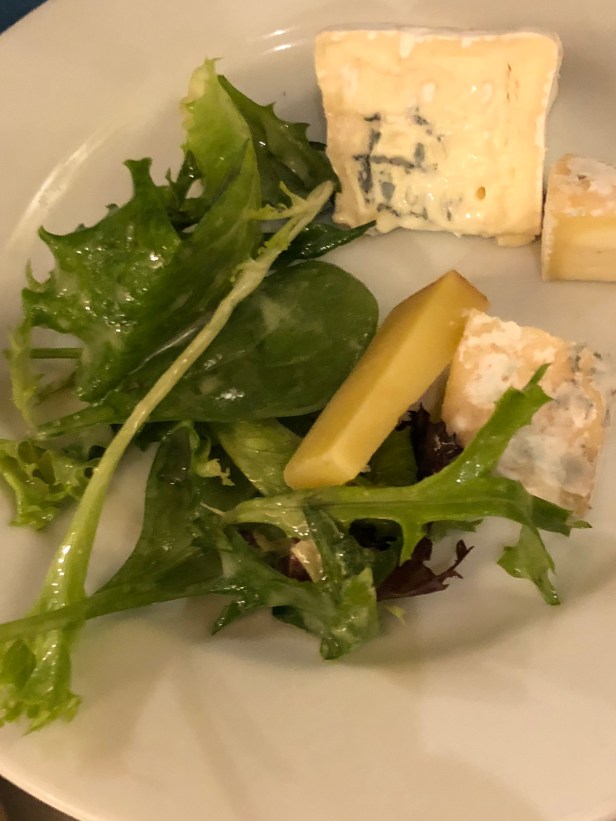
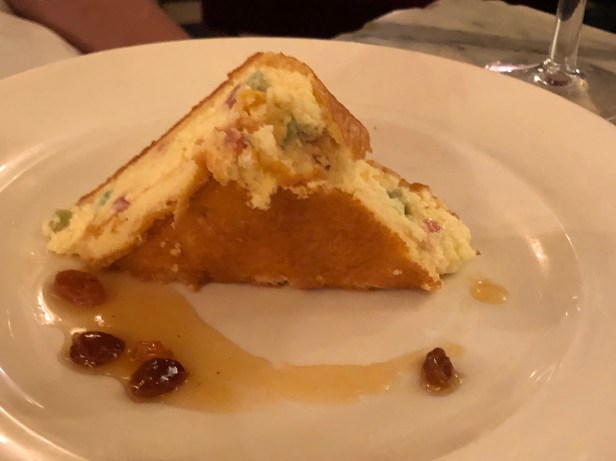
Cervelle de canut (frmage blanc, echolotes et fines herbes) / Fresh farm cheese seasoned with cream, chives, shallots, olive oil 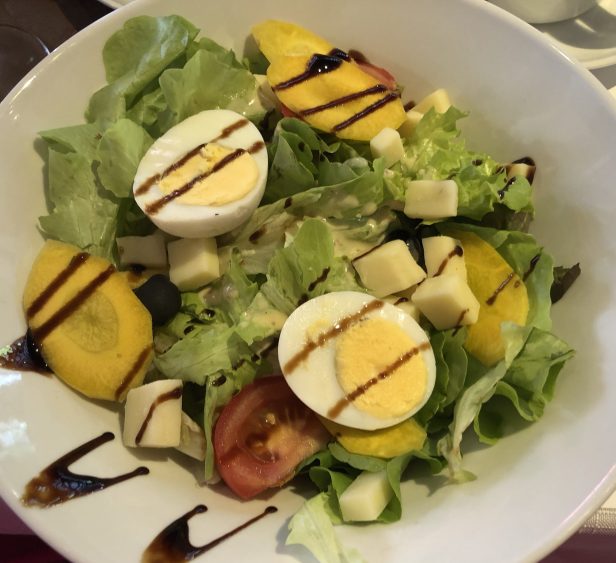
Salade mixte (salade verte, tomates, comte, oeuf dur 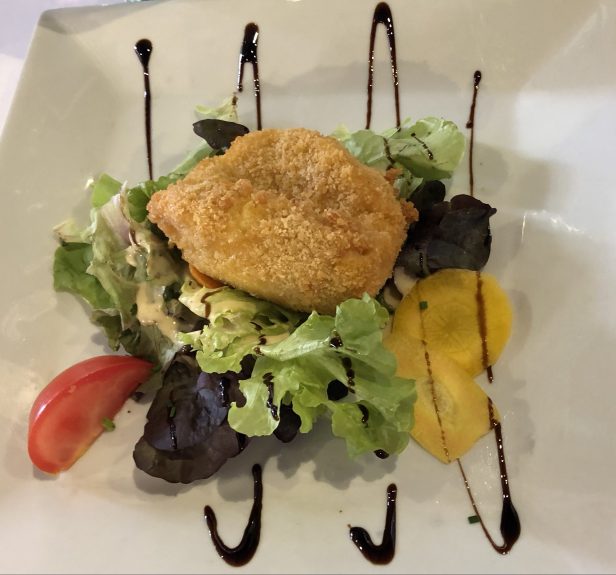
Croustillant de Saint Marcellin / Salad with Saint Marcellin cheese 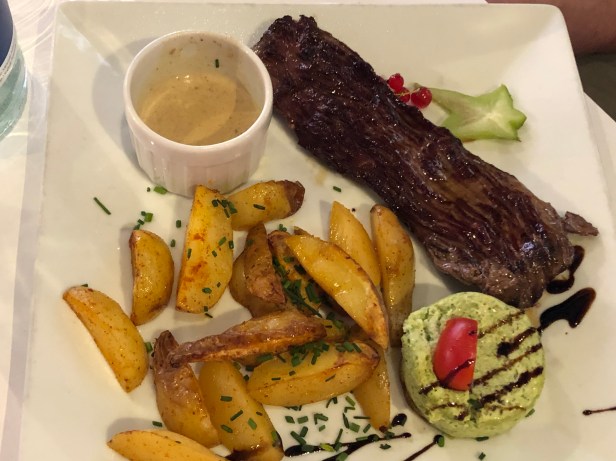
Bavette, foie grasBeef flank with foie gras 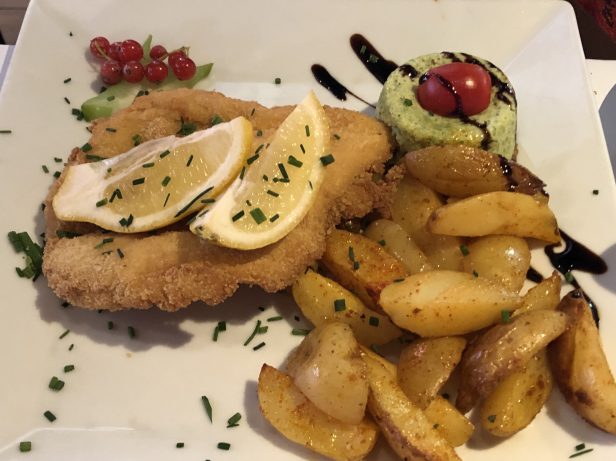
Escalope de poulet pane / Chicken breast in bread crumbs 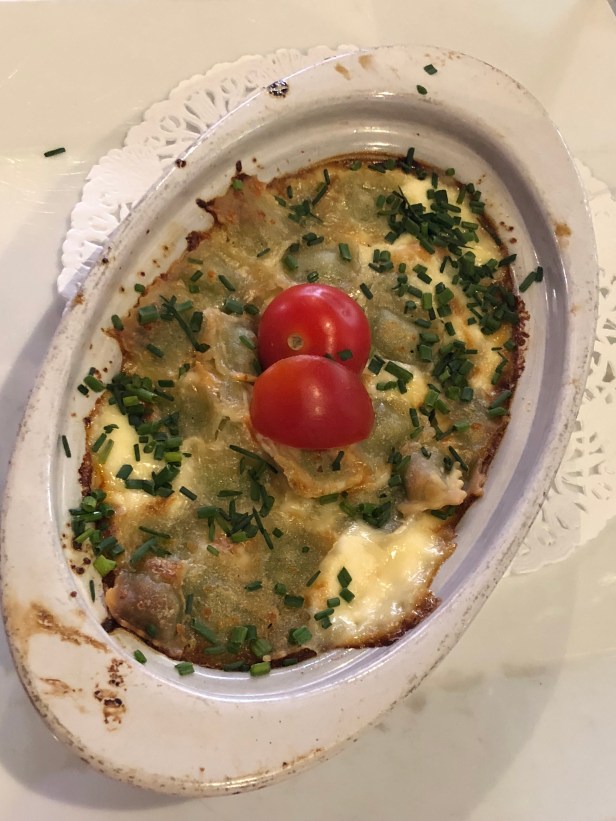
Escalope de poulet pane / Chicken breast in bread crumbs 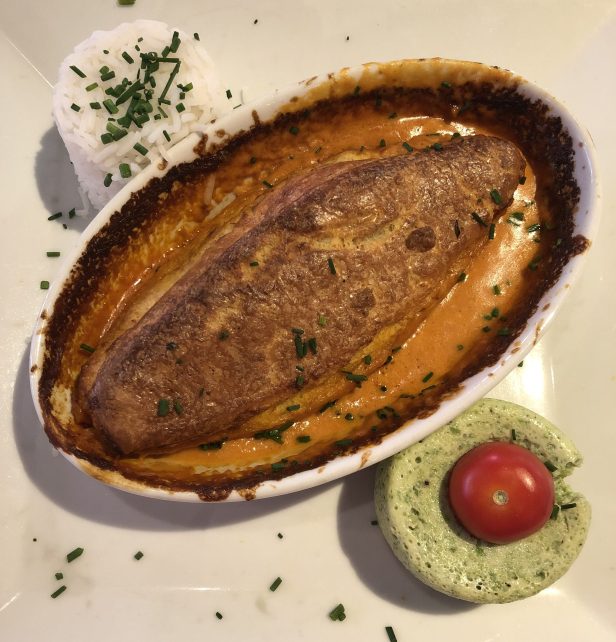
Quenelle de brochet artisanale / Pike souffle 
 Karen's Travels